
12 Interesting Things You Probably Don't Know about Traffic

- Traffic lights originated from the railroad
- Country with the most number of traffic accidents
- "Molecular Traffic"
- Buses have their perks
- Longest traffic jam by line length and number of cars
- Charles Adler’s “Horn-Traffic Invention"
- Longest traffic congestion time
- Traffic—the bacterial way
- Number one traffic victim: Birds
- Billboards are…EVIL (?!?)
- Added lanes don’t mean lesser traffic
- Final Word
So you probably think you know everything there is to know about traffic. After all, you're experiencing it firsthand every day, which makes you literally a treasure trove of information when it all comes down to it.
Still, you'd be surprised to hear you really know so little of it. Here are some unknown facts about traffic that you should know:
Traffic lights originated from the railroad
 @pixabay.com
You might think that traffic lights were created to manage all those vehicles on the road, but they were first used as signal lights for railroad drivers.
The original signal lights used were green for caution, red for possible danger, and white for go. However, they decided to take out white from the mix because it was easily overlooked during the day. In the end, they settled for the green, red, and yellow traffic lights we all know today.
Country with the most number of traffic accidents
According to World Health Organization's (WHO) 2009 study, the country with the highest number of road accident fatalities in the world is India. In 2006, it registered 105,725 accidents and deaths alone. There are two important reasons for this:
1) Countries with low median income rates like India often have higher accident and death rates compared to countries with higher median income.
2) India relatively has a lot of unregulated traffic locations, where vehicles, pedestrians, and even livestock use the same road at all times.
"Molecular Traffic"
Think traffic is only a road issue? Think again. It’s also an issue for the single-celled organism. Motor enzymes are always in the process called “molecular traffic”, where they are continuously moving around crowded DNA to replicate or repair genetic code.
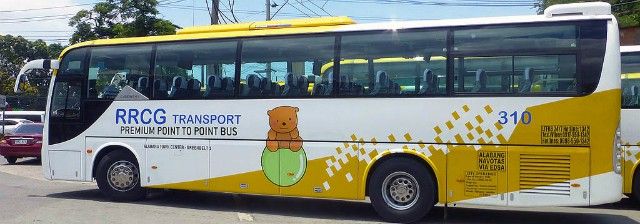
Buses have their perks
 ©mmda.gov.ph
Buses aren’t getting enough respect these days. And despite the fact that they cause a lot of pollution and traffic on the road, their one redeeming quality is accommodation.
Did you know that a bus can carry the same number of people that can be carried by 30 cars? What's more they only occupy the equivalent of three cars when it comes to road space.
Longest traffic jam by line length and number of cars
Ever wondered what is the longest traffic jam (by line length) in history? No, it's (shockingly) not in the Philippines. According to Guinness World Records, it happened in France.
The traffic jam, which stretched 175 km from Lyon to Paris, happened on February 16, 1980. The reasons were simple: poor weather and a huge volume of cars returning from their ski holidays on the French Autoroute.
Similarly, the longest traffic jam (by the number of cars) occurred in Hamburg, Germany on April 12, 1990. That time, Germany was undergoing a reunification process, which is why there were around 18 million drivers struck at the East-West border.
Charles Adler’s “Horn-Traffic Invention"
If there’s one invention we’d like to be implemented ASAP in this lifetime, it would be what Charles Adler invented in 1928. And what was his great invention? It was to activate traffic lights just by honking the car horn.
Imagine what that could do to us the next time we're stuck in traffic on EDSA.
Longest traffic congestion time
 © toyotamotors.ph
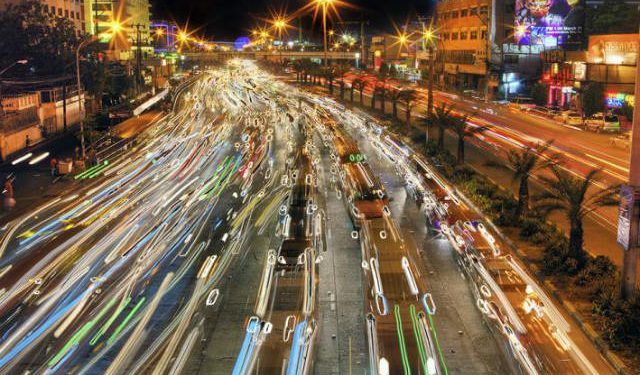
The longest recorded traffic congestion time in history happened in Beijing, China on August 2010. It happened on the Beijing-Tibet Expressways, where drivers were in a 62-mile traffic congestion that lasted over 12 days. And during that time, drivers took around three days to pass through the congestion, crawling at a speed of around two miles per day.
The cause of the long traffic time was due to the volume of cars on the road and trucks bringing construction supplies using that route. Ironically, these same trucks carried supplies that were to be used to lessen traffic congestion on the same highway.
Traffic—the bacterial way
And speaking of China’s 12-day hell traffic jam, that incident has led the Chinese government to improve their traffic management system by turning to a minute thing: E. coli bacteria. Officially called “Bacterial Foraging Optimization”, they are studying bacterial behavior to know the best way to code their traffic lights.
In case you’re wondering why China’s getting obsessed with bacteria, it’s because researchers from Hokkaido University have observed that studying the patterns of slime mold could show how to make traffic patterns more effective and less problematic. This is backed up by an Ohio State professor who noticed that E. coli spent greater time swimming to its food than away from it, performing a natural optimization of movement that can also be likened to traffic behavior and movement.
Number one traffic victim: Birds
While traffic is a big problem to most species in the world, one species really stands out in terms of death toll: Birds.
There are around a quarter of a billion birds that are killed all over the world annually.
Interestingly, there are some birds that have evolved over time, and have adapted their movements depending on traffic. An example is the Roadkill-noshing crows, which stop eating their meals and fly or walk to the opposite lane as they see approaching traffic.
Billboards are…EVIL (?!?)
 @youtube.com
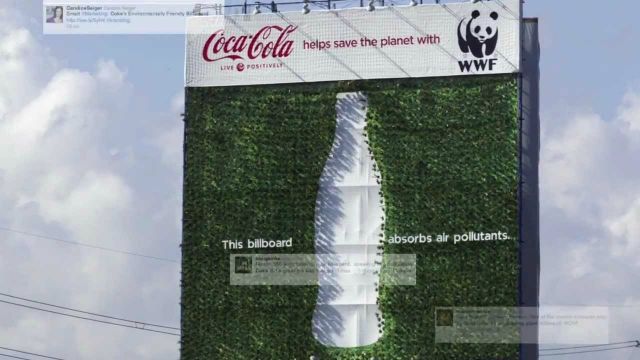
According to the Institute for Road Safety Research in Netherlands, drivers spend less of their attention on the road and drivers around them when there are billboards splattered everywhere. This gets even worse when they’re digital billboards, since it's just like a giant TV placed outside for everyone to see.
What's more, they can influence how you react to traffic lights. The University of Granada also had an interesting report about how the last billboard you see before you pass through a yellow light can have an influence on whether you decide to stop or continue driving. Those who saw a billboard with a negative subject matter were more likely to stop when they see the yellow light. On the other hand, billboards that showcased positive and cheerful images were more likely to beat the red light.
Added lanes don’t mean lesser traffic
Researchers from the University of Pennsylvania have studied the correlation between the amount of traffic on the roads and how big the roads are over the course of 10 years. They found out that the amount of traffic increased in direct proportion to the number of new roads added.
They also learned that expanding the lanes don’t work; what does work is making those roads more selective or a "privilege" to those who use it.
This is actually practiced in London, where they charge a certain fee for the use of their roads. The result was that people planned their trips more to save on paying fees. They combined trips, use another mode of transportation (such as biking or walking), or use mass transportation system (like buses and trains).
Final Word
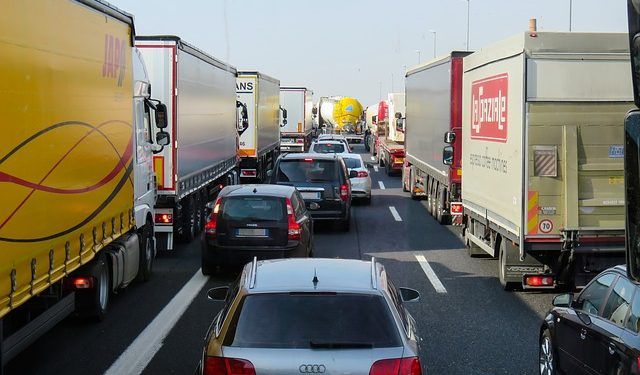
Did you know that traffic jams have actually existed before the automobile was invented? Back in the 1860s, a pioneer of vehicular traffic control named William Phelps Eno wrote how horse-drawn carriages on the streets of New York caused "gridlock" from time to time.
So yes, traffic is REALLY old. And with so much time and experience on its belt, it's probably the reason why it always seems to get the best of us (and many countries) even today. Hopefully, this wouldn't be the case for the Philippines in the near future.
Featured Articles
- Latest
- Popular
Recommended Articles For You
-
BYD Atto 3 receives updates for 2025Paulo Papa . Jan 22, 2025
-
Things 2nd-hand car owners must check before 2025Paulo Papa . Dec 27, 2024
-
PEVS 2024: event summaryPaulo Papa . Oct 30, 2024
-
Here’s what went down at PIMS 2024Paulo Papa . Oct 29, 2024
-
-
Check out Hero Motorcorp’s 3-model lineup in PHPaulo Papa . Aug 06, 2024
Featured Cars
- Latest
- Upcoming
- Popular
Car Articles From Zigwheels
- News
- Article Feature
- Advisory Stories
- Road Test
-
Here’s what to expect at MIAS 2026Ruben Manahan IV . Apr 01, 2026
-
UAAGI to offer free vehicle service checkups this Holy WeekRuben Manahan IV . Apr 01, 2026
-
BMW PH expands PHEV lineup with X1 xDrive25e xLine launchRuben Manahan IV . Apr 01, 2026
-
SM Supermalls EV charging network now 160-station strongRuben Manahan IV . Apr 01, 2026
-
Porsche expands EV SUV portfolio with Cayenne SPaulo Papa . Apr 01, 2026
-
Examples of major autonomous driving companies from around the worldCesar Miguel . Apr 01, 2026
-
Changan CS15: what are the updates?Paulo Papa . Mar 30, 2026
-
Mazda CX-60: What’s new for 2026?Cesar Miguel . Mar 30, 2026
-
VinFast Limo Green: strengths, weaknessesCesar Miguel . Mar 27, 2026
-
Mitsubishi Triton GX 2WD AT: would you consider it?Paulo Papa . Mar 26, 2026
-
Tips on how to prevent vehicle firesCesar Miguel . Mar 17, 2026
-
How to prepare your car for summerCesar Miguel . Mar 11, 2026
-
Avoid road trip horror stories this 'Undas' with these tipsRuben Manahan IV . Oct 20, 2025
-
Here are ways to avoid road ragePaulo Papa . Sep 23, 2025
-
How well do you understand traffic signs?Cesar Miguel . Sep 09, 2025
-
BYD DM-i lineup conquers Southern LuzonCesar Miguel . Mar 10, 2026
-
Hyundai Creta Premium: balancing engaging drive,comfortCesar Miguel . Feb 13, 2026
-
First drive: 4th-gen Changan CS55 PlusPaulo Papa . Feb 09, 2026
-
Changan CS15: small upgrades makes the differenceCesar Miguel . Feb 06, 2026
-
First drive: Changan Eado PlusPaulo Papa . Feb 03, 2026