
Is loss of use coverage worth adding to your car insurance policy? Let’s evaluate

- KEY TAKEAWAYS
- What is loss of use coverage?
- Car repair in 2026
- Loss of use coverage: Usual inclusions
- Rental car reimbursement
- Transportation allowance
- Temporary mobility support
- Loss of use coverage: Situations where this add-on becomes valuable
- After an accident
- During flood/typhoon damage repairs
- Repair delays due to part shortage
- Loss of use coverage: Who should consider & who should avoid?
- Consider loss of use if -
- Don’t consider loss of use if -
- Loss of use coverage: Cost-benefit analysis
- How much does it cost to add this coverage?
- Small cost vs. big convenience
- Tips to choose the perfect insurance plan
- Tip 1: Ask questions, especially the essential ones, when getting a policy
- Tip 2: Read the fine print
- Tip 3: Choose wisely & compare
Before deciding which car insurance add-on to include in your policy, it is crucial that you first understand them thoroughly. While we have already discussed total loss, roadside assistance, and acts of god coverages in detail. It is now time to learn about another important coverage: loss of use.
KEY TAKEAWAYS
What is the biggest advantage of loss of use coverage?
One of the biggest advantages of loss of use coverage is that it offers convenience and financial protection during unexpected repair work, especially those that take time. This add-on helps minimise stress when your car is unavailableI drive to work every day. Should I get loss-of-use coverage?
Yes. Make sure to include this coverage in your plan, as your car is an essential part of your work routine.I have two cars at home. Should I get loss-of-use coverage?
With a backup car at home, you can skip this coverage.Is loss of use coverage expensive?
If you add loss-of-use coverage, your premium increases slightly, but in the long run, it helps save significant transportation costs.Is the loss of use add-on useful for flood damage claims?
Definitely. You see, flood-related damage can take weeks to repair, making loss-of-use coverage essential.Will the loss-of-use add-on cover taxi expenses?
In most cases, loss of use coverage provides a transportation allowance rather than rental reimbursement. However, it is better to check the same with your provider.Save Up to 60% on Car Insurance Renewal
- CASA Coverage Up To 10 Years Old
- Free Roadside Assistance
- Free Acts of God/Acts of Nature
 T&C
T&C
Also Read: Car insurance add-ons in the Philippines: Myths, facts, and smart choices
What is loss of use coverage?
In the world of car insurance, loss of use coverage helps car owners/policyholders pay for transportation expenses when the insured car is out of service for repairs after a covered accident or damage.
In short, when your car is unavailable, and you need to rely on outside sources of transportation, that comes with a price tag; there is only one coverage that helps you cover these expenses - the loss of use.
In general, the loss of use coverage includes the following: rental car reimbursement, daily transportation allowance, temporary replacement vehicle assistance, and ride-hailing support.
Loss of use coverage = Financial help while your car is out of service
Example -
Your car was in an accident and needs to be in the repair shop for 15 days. Without loss of use coverage, you would end up paying for taxis, rentals, or other means entirely from your pocket.
But with loss-of-use coverage, your provider may reimburse your transportation costs (up to the policy limits).
Also Read: Common roadside emergencies & coverage that will be your saviour
Car repair in 2026
Car repair costs are at an all-time high. With imported parts, high labour costs, and delays in repair work, the process has become complicated, lengthy, and expensive. In such a case, even minor accidents can leave your car in the workshop for weeks, sometimes even up to a month.
And all this while, when your car is stuck in the workshop, you are relying on a taxi, Grab, public transportation services - all of which cost money. The only thing you save in such a situation is the loss-of-use coverage.
Also Read: Is your car insurance still worth it? 5 signs it’s time to review your policy
Loss of use coverage: Usual inclusions
Not all car insurance providers offer the same benefits for loss-of-use coverage. Here are a few usual inclusions -
Rental car reimbursement
This is one of the most common inclusions of this coverage. If your car is under repair due to a covered claim, the insurer will cover the following charges: daily rental car fees, temporary car access, and replacement vehicle costs.
Note that insurers usually have limits on daily reimbursement and the maximum number of covered days.
Transportation allowance
Some providers offer a fixed transportation allowance rather than rental reimbursement. This service helps policyholders cover expenses for Grab rides, taxi fares, fuel for a borrowed car, and public transport costs.
 Photo from Freepik
Temporary mobility support
A few providers offer policies with broader mobility assistance. This includes services like - chauffeur service, emergency travel support, and partner transport services.
Such services are uncommon and mostly limited to high-end plans.
Also Read: Mistakes car owners make with add-ons: 7 costly errors that must be avoided
Loss of use coverage: Situations where this add-on becomes valuable
Quite often, car owners feel the loss-of-use coverage is unnecessary until they are unfortunate enough to experience an accident. In such situations, this add-on feels like one of the smartest decisions. Let’s have a look at a few such situations -
After an accident
Even a small collision can result in damage requiring part replacement, which, in turn, can create issues such as repair shop backlogs and delays in claim approval. Often, a ‘quick repair’ turns into a 2- to 3-week wait. Thus, leading car owners to rely on taxi or Grab services, which is a significant expense.
During flood/typhoon damage repairs
Acts-of-nature coverage is quite common among Filipino car owners, given the country’s high-risk location. Flood damage, electrical issues, and other damages require car owners to opt for major repairs. Furthermore, during the rainy season, repair shops are overwhelmed, leading to long wait times and inconvenience.
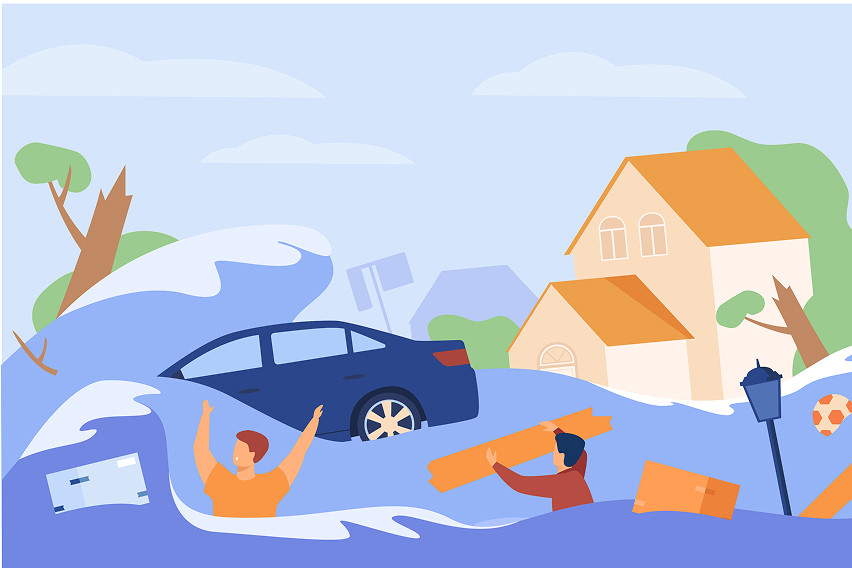 Photo from Freepik
Repair delays due to part shortage
It’s 2026, and supply chain delays are still a reality - affecting the car repair timeline. For imported cars, parts replacement can take weeks or even months.
In all these cases, the absence of loss-of-use coverage makes the waiting time very expensive.
Also Read: Your parking habits could be costing you—here’s how to fix them
Loss of use coverage: Who should consider & who should avoid?
Every add-on offers protection against a specific danger. So, if you think you and your car can fall victim, opting for that coverage makes total sense; if not, why waste your money? Here, we’ll discuss when you should consider loss-of-use coverage and when to avoid it altogether.
Consider loss of use if -
You are a daily commuter: If you drive to work every day, losing your car would be a major issue. This would lead to an immediate loss, forcing you to use public transportation or a taxi. Neither is a practical solution: the former because of long routes, and the latter because of the expense. In such situations, loss-of-use coverage makes total sense.
You are a business owner using private vehicles: If you are a business owner whose car supports you in the process, like deliveries, client meetings, site visits, etc, downtime could mean loss of income and a hell of a lot of convenience. In such cases, loss-of-use coverage is a smart financial decision.
You are a parent with school runs: Parents of young children understand the importance of reliable transport. You need the car for kids' school pick-up and drop-off, doctor visits, grocery runs, and whatnot. For such families, loss-of-use coverage provides greater value.
Don’t consider loss of use if -
You own multiple cars: If you have a backup vehicle (s) at home, temporary transportation may not be a major issue after a major accident. Here, you can easily skip the loss-of-use coverage.
You rarely drive: If you are someone who rarely uses your car, and when you do so, it is for weekend trips or occasional errands, this coverage can be avoided, as you are not exposed to daily risks.
Also Read: How regular car maintenance can protect your insurance claims: Let’s find out!
Loss of use coverage: Cost-benefit analysis
This is the real discussion that’ll help you decide whether to add or skip loss-of-use coverage. Let’s get started -
How much does it cost to add this coverage?
Loss-of-use coverage is usually an affordable add-on. Often, it only adds a small percentage to your annual premium, which again depends on the vehicle type, coverage, insurer, and coverage limit.
Compared to other major add-ons, this one costs relatively little.
Small cost vs. big convenience
When deciding upon this coverage, ask yourself the following questions
‘Would you rather pay a small premium today or spend thousands when the car is getting repaired?’
For most Filipinos, the answer is obvious: a small cost of protection today rather than sudden, large expenses later.
Also Read: Recipe to choose the right insurance policy for your high-end car
Tips to choose the perfect insurance plan
Not all insurance policies are the same; one should shop very carefully, as one small addition today can save you hundreds of pesos tomorrow. Here are some practical tips to help you decide -
Tip 1: Ask questions, especially the essential ones, when getting a policy
General questions -
- What exactly does the policy cover?
- What are the policy exclusions?
- Are acts of nature coverage included?
Questions specific to loss of use coverage -
- What is the daily allowance limit?
- Is there a waiting period?
- Is rental reimbursement covered?
- How many days' worth of reimbursement are covered?
Tip 2: Read the fine print
Make sure to read the policy fine print; do not skip it at any cost, as you can learn a lot from it.
When it comes to loss-of-use coverage, read the exclusions, as some policies have specific terms. For instance, reimbursement is issued only if -
- Another party is at fault.
- Claims are approved first.
- Repairs take place at an accredited shop.
Tip 3: Choose wisely & compare
When choosing a car insurance provider, make sure to go with IC-certified providers. Look at key factors such as the provider’s reputation and financial well-being. Also, make sure you compare at least 2 or 3 policies (apples-to-apples) to get the best deal - you can use online tools to do so.
Also Read: Common myths around total loss car insurance & the truth behind them
Bottom line
Many new car owners remain confused about car insurance, especially which add-ons to consider and which to drop. One such add-on that Filipino drivers often ponder is Loss of Use coverage.
So, should you get it or avoid it? The answer is yes (for most car owners).
Why? You ask. It is not just the rental car expense you would shoulder while your car is being repaired; it is also about protecting your routine, reducing stress, and not disturbing your budget (with surprise expenses).
Loss of use coverage is like having a real back support when your vehicle gets damaged. Also, in a country like ours, where traffic is insane, repairs take a long time, and transportation costs are high, having this coverage is a blessing.
Who should get it? Make sure to include loss-of-use coverage in your plan if your car plays an important role in your life, whether for work, family, or your daily commute.
Remember, often the best insurance decisions aren’t the major ones, but the small, smart ones.
Also Read: Zero-depreciation car insurance: Is it worth it in 2026?
Featured Articles
- Latest
- Popular
Recommended Articles For You
You Might Also Be Interested In
- Journal
- Advice
- Financing
-
-
-
Kia PH widens BEV stable with all-new EV3Ruben Manahan IV . Sep 21, 2026
-
PH-spec Ford Everest, Ranger get major revampRuben Manahan IV . Sep 04, 2026
-
-
-
How to handle a checkpoint: The right and wrong movesCarmudi PH . Apr 14, 2025
-
-
-
-
-
How Much Can You Borrow Against a Fully Paid Car?Carmudi PH . Oct 06, 2026
-
-
-
Featured Cars
- Latest
- Upcoming
- Popular
Car Articles From Zigwheels
- News
- Article Feature
- Advisory Stories
- Road Test
-
Toyota Motor PH donates P3M to support Tamaraw conservationRuben Manahan IV . Oct 08, 2026
-
Denza PH opens pre-order books for Z9 GTRuben Manahan IV . Oct 08, 2026
-
Suzuki poised to launch e SKY in Japan, will it fly in PH?Paulo Papa . Oct 08, 2026
-
Continental Tire PH brings all-new CrossContact A/T2Ruben Manahan IV . Oct 08, 2026
-
Hyundai sets up shop in Balintawak anewRuben Manahan IV . Oct 08, 2026
-
3 reasons to buy the all-new Lexus ESCesar Miguel . Today
-
5 exciting things about the Kia EV3Paulo Papa . Today
-
iCAUR V27: 1st lookPaulo Papa . Oct 02, 2026
-
iCAUR V23: 1st impressionsPaulo Papa . Oct 01, 2026
-
3 reasons to be excited about the iCAUR V27Cesar Miguel . Sep 25, 2026
-
Weighing down on car parkingPaulo Papa . Sep 24, 2026
-
Tips on how to prevent vehicle firesCesar Miguel . Mar 17, 2026
-
How to prepare your car for summerCesar Miguel . Mar 11, 2026
-
Avoid road trip horror stories this 'Undas' with these tipsRuben Manahan IV . Oct 20, 2025
-
Here are ways to avoid road ragePaulo Papa . Sep 23, 2025
-
Sedan supremacy: Toyota Corolla Altis GR-S HEVPaulo Papa . Aug 27, 2026
-
First drive: Kia Sportage Turbo HybridCesar Miguel . Aug 18, 2026
-
First impressions: Geely EX2Cesar Miguel . Jun 18, 2026
-
ELECTRIA: VinFast VF 6 is a well-equipped urban warriorCesar Miguel . Apr 20, 2026
-
BYD DM-i lineup conquers Southern LuzonCesar Miguel . Mar 10, 2026