
Should You Use Nitrogen Air Tires Instead of Regular Air for Your Car?

Our answer is no -- unless you’re competing for the NASCAR Cup Series, or perhaps operating a Boeing aircraft. Otherwise, we think it’s just an impractical "placebo" for motorists who use their cars for daily work or travel.
But we’re getting way ahead of ourselves here. For all we know, it might be something you want to try out for yourself. There are a lot of car owners who prefer Nitrogen than regular air in their tires. And there’s nothing wrong with that. But before you decide to try it out, make sure to learn more about it first.
 ©www.acecars.net
What is Nitrogen?
Nitrogen is an inert, non-flammable, colorless gas. You might be surprised to know that the air you breathe is mostly composed of Nitrogen, not Oxygen. In fact, 78% of what you inhale is Nitrogen, 21% is made up of Oxygen, and the rest are made up of Carbon Dioxide, water vapor and small concentrations of noble gases like Neon and Argon.
Why use Nitrogen?
According to Nitrogen tire enthusiasts, it can do the following:
1. Increase tire pressure retention.
This is one of the most powerful arguments that Nitrogen advocates use. Tires gradually lose pressure, and temperature fluctuations can greatly hasten this process.
Generally, the rule is a loss of 1 psi for every 10-degree temperature increase or decrease. What Nitrogen does is retain the air inside the tires far longer than regular air -- even when temperature changes.
All tires contain microscopic pores, and air eventually seeps out over a period of time. This causes a tire's air pressure to decrease. Nitrogen has large molecules, so it doesn’t escape out of these pores easily. On the other hand, Oxygen escapes 3-4 times faster than Nitrogen, while the rest of the gases seep out 250 times faster.
The result is a more stable tire pressure that lengthens its “contact patch” on the road, making tires last longer. They won’t wear out prematurely in the center when over-inflated, nor would their shoulders wear out fast when under-inflated.
Does it really increase tire pressure retention?
Consumer Report did a year-long study to see the actual amount of air loss that Nitrogen-filled tires experience compared to the regular ones. The result shows that Nitrogen tires hold air pressure inside longer, but the difference between the two is a minimal 1.3 psi. Really, it's not significant enough to convince us otherwise.
2. Improve fuel efficiency.
Nitrogen allows for better fuel efficiency because it helps retain tire pressure longer. The EPA reported that under-inflated tires lower gas mileage by 0.3% for every 1 psi drop in pressure for all the four tires. On the other hand, a properly inflated tire can increase your gas mileage by about 3.3%.
Nitrogen allows tires to maintain the right pressure for a longer period of time. This reduces their rolling resistance, lessening the car's engine load so it uses up less fuel in the process.
Does it really improve fuel efficiency?
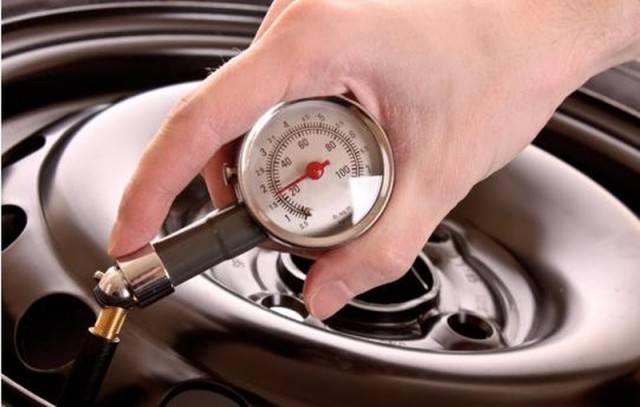
Yes, it does. But you can also increase your car’s fuel efficiency by buying a tire-pressure monitoring system. If your vehicle is old school, you can simply just check your tire pressure at least once (or twice) a month to keep your tires at their recommended gauge.
It just takes a bit of discipline. What's more, it will cost you less.
And speaking of cost, you usually pay around P50-P100 for a standard nitrogen refill for each tire. That’s around P200-P400 for every nitrogen refill you need to make every 3-4 months. On the other hand, a decent tire pressure gauge will cost you around P500, and you can continue to use it without ever spending another dime again.
 © i.enkivillage.com/
3. Slow down tire aging and wheel corrosion.
Oxygen can retain moisture inside tires, causing them to age prematurely. There are also extreme cases where moisture can cause your tire's steel belts to become rusty.
Nitrogen is dry, so using around 93% - 95% of pure Nitrogen will prevent humidity and moisture from collecting inside your tires.
Does it really slow down tire aging and wheel corrosion?
Many tire experts say that a car driven under normal conditions will have its tire treads reach its minimum usable depth way before tire walls oxidize and the wheels start to rust inside. In other words, a tire's wear-and-tear actually happens faster on the outside than on the inside. Whatever the case, corrosion still happens, and it's just a matter of time before they manifest outside -- or inside.
4. Cool down tire temperature.
Pressurized air can cause humidity to condense to a liquid, which can collect in the air storage tank that's commonly used at local gas stations. When a gas attendant fills up your tire, a bit of water may be included during the transfer. This turns to gas once you drive your car, causing your tires to heat up and increase in pressure. Consequently, tire pressure fluctuates, especially when temperature changes.
Nitrogen, on the other hand, is dry, so there's no water to cause pressure changes inside your tires. Therefore, less heat is created, and pressure fluctuations are lessened.
Does it really cool down tire temperature?
Yes, but not in a drastic way. A study made by ExxonMobil in 2008 showed that the temperature fluctuations weren't even significant to begin with.
So when should you use Nitrogen?
 ©bloximages.newyork1.vip.townnews.com
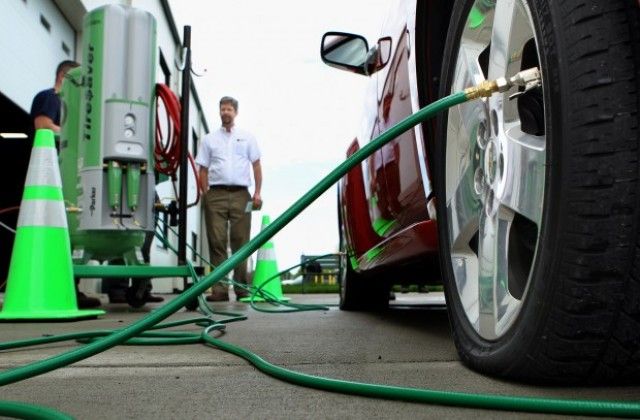
Nitrogen's benefits lie at the upper levels of tire performance spectrum. It's useful for race car drivers who need to reduce tire pressure changes, so handling remains at optimum levels. It can also be extremely helpful for commercial vehicles that need to eliminate water vapor to prevent tires from freezing (like aircrafts) or exploding due to intense heat (such as race cars and heavy duty trucks and machineries).
Nitrogen tires can also be good for vehicles that sit for a long time or are driven sparingly, since it can help their tires and wheels to last much longer than regular air tires. If you own vintage or collectible cars, then Nitrogen tires maybe the right one for you.
However, like what we've said earlier here, it’s doubtful if an average driver who goes to work or travels a lot can get any benefit from using it, particularly when it comes to cost and convenience. There are not a lot of auto shops that offer Nitrogen tire refills in the Philippines, so it will require some effort on your part to maintain them.
Whatever the case, the decision is up to you. Nitrogen air is relatively harmless, and the good news is that you can always go back to filling your tires with regular air for free.
Featured Articles
- Latest
- Popular
Recommended Articles For You
-
-
-
-
-
-
Honda PH: Be a better rider during lockdownRuben Manahan IV . Jun 25, 2020
Featured Cars
- Latest
- Upcoming
- Popular
Car Articles From Zigwheels
- News
- Article Feature
- Advisory Stories
- Road Test
-
Here’s what to expect at MIAS 2026Ruben Manahan IV . Today
-
UAAGI to offer free vehicle service checkups this Holy WeekRuben Manahan IV . Today
-
BMW PH expands PHEV lineup with X1 xDrive25e xLine launchRuben Manahan IV . Today
-
SM Supermalls EV charging network now 160-station strongRuben Manahan IV . Today
-
Porsche expands EV SUV portfolio with Cayenne SPaulo Papa . Today
-
Examples of major autonomous driving companies from around the worldCesar Miguel . Today
-
Changan CS15: what are the updates?Paulo Papa . Mar 30, 2026
-
Mazda CX-60: What’s new for 2026?Cesar Miguel . Mar 30, 2026
-
VinFast Limo Green: strengths, weaknessesCesar Miguel . Mar 27, 2026
-
Mitsubishi Triton GX 2WD AT: would you consider it?Paulo Papa . Mar 26, 2026
-
Tips on how to prevent vehicle firesCesar Miguel . Mar 17, 2026
-
How to prepare your car for summerCesar Miguel . Mar 11, 2026
-
Avoid road trip horror stories this 'Undas' with these tipsRuben Manahan IV . Oct 20, 2025
-
Here are ways to avoid road ragePaulo Papa . Sep 23, 2025
-
How well do you understand traffic signs?Cesar Miguel . Sep 09, 2025
-
BYD DM-i lineup conquers Southern LuzonCesar Miguel . Mar 10, 2026
-
Hyundai Creta Premium: balancing engaging drive,comfortCesar Miguel . Feb 13, 2026
-
First drive: 4th-gen Changan CS55 PlusPaulo Papa . Feb 09, 2026
-
Changan CS15: small upgrades makes the differenceCesar Miguel . Feb 06, 2026
-
First drive: Changan Eado PlusPaulo Papa . Feb 03, 2026