
How car colour, model, & part availability affect insurance cost: Powerful insights every car owner should know

- KEY TAKEAWAYS
- Car insurance pricing in the Philippines
- Car colour, model, & parts availability: Effect on premium
- Car colour & insurance premium
- Car model & insurance cost
- Part availability & insurance pricing
- Car colour & risk perception
- Are bright-coloured cars more expensive to insure?
- Car model: Performance, safety, & theft rates
- SUV vs. Sedans vs. Hatchbacks
- Luxury & sports cars
- Part availability & repair cost
- Japanese vs. European brands
- Electric & hybrid vehicles
- Real-life scenarios
- How to lower your car insurance premium
Car insurance isn’t just another yearly expense; it’s protection for one of your biggest and probably most loved investments. If you are a Filipino car owner, you’ve probably wondered why your premium is higher or lower than your friends and family. Believe it or not, a car’s colour, model, and parts availability affect insurance costs.
KEY TAKEAWAYS
Does car colour really affect insurance cost?
Not significantly. Insurers usually focus on the model, value, and repair cost rather than colour.Why are Japanese cars cheaper to insure?
That’s because Japanese cars offer advantages such as wide & easy access to parts, faster repairs, and lower maintenance costs.Do SUVs cost more to insure than sedans?
The model that is luxurious, costly, and expensive to repair is costlier to insure.Are luxury cars expensive to insure?
Yes, luxury imported cars with advanced tech, and high theft risk typically lead to higher premiums.How does parts availability affect claims?
Limited parts mean longer repair times and higher claim payouts, which in turn lead to higher premiums.What is the smartest choice for affordable insurance?
Go for a car that is widely loved, has easy-to-find parts, and offers strong safety features.Save Up to 60% on Car Insurance Renewal
- CASA Coverage Up To 10 Years Old
- Free Roadside Assistance
- Free Acts of God/Acts of Nature
 T&C
T&C
Let’s break it down in simple terms so you can make smarter decisions before buying your next car - or renewing your policy.
Car insurance pricing in the Philippines
Car insurance companies in the Philippines don’t just randomly assign premiums. They calculate risk.
The higher the risk, the higher the premium.
Here are the common factors insurers look for while deciding the premium -
- Car’s value
- Driver’s age & history
- Location
- Car model
- Availability of spare parts
- Theft rates
- Repair cost
Most Filipino drivers focus only on the car’s price. But insurance companies look deeper. They ask, "How much will it cost to fix this car?" Are parts easy to find locally?
This is where car colour, model, and parts availability come into play.
Also Read: Bought a new Car? Getting a new insurance policy vs adding it to your existing plan
Car colour, model, & parts availability: Effect on premium
Let’s get straight to the point. When insurers assess your vehicle, they evaluate the following -
- Risk visibility (colour-related perception)
- Performance and safety (model-specific factors)
- Repair & replacement (part availability)
Each factor influences the premium you pay each year.
While car colour usually has the smallest impact, car model and parts availability significantly affect pricing. Think of it like this: If your car is expensive to repair and its parts are hard to source, insurers expect bigger payouts when an accident happens.
Car colour & insurance premium
 Photo from Freepik
Here’s the truth: In the Philippines, car colour has minimal direct impact on the insurance cost. However, it often indirectly affects the risk associated with the car’s colour.
Many believe red cars are more expensive to insure because they attract attention. In reality, insurers focus on data - not on myths.
Still, colour often affects visibility at night, resale value, and accident probability (in certain weather conditions).
White, silver, and grey are popular in the Philippines because they reflect heat and are easier to maintain. These colours also tend to have better resale value, which can slightly influence insured value.
So no, choosing red won’t automatically raise your premium - but going for a high-performance red sports car might!
Car model & insurance cost
Now this is where things get serious.
Your car model heavily affects your insurance because insurers analyse the following -
- Engine size
- Safety features
- Accident records
- Theft statistics
- Market value
For example -
- A standard and popular sedan like the Toyota Vios usually has a lower premium because parts are widely available and repairs are affordable.
- A performance car like the Ford Mustang costs more to insure due to higher speed risks and expensive repairs.
- SUVs like the Mitsubishi Montero Sport may have a moderate premium because they are common, but theft risk and repair costs matter.
Insurance providers usually assume high-performance vehicles are driven fast and more aggressively. Whether you say that’s fair or not - that’s how risk modelling works.
Part availability & insurance pricing
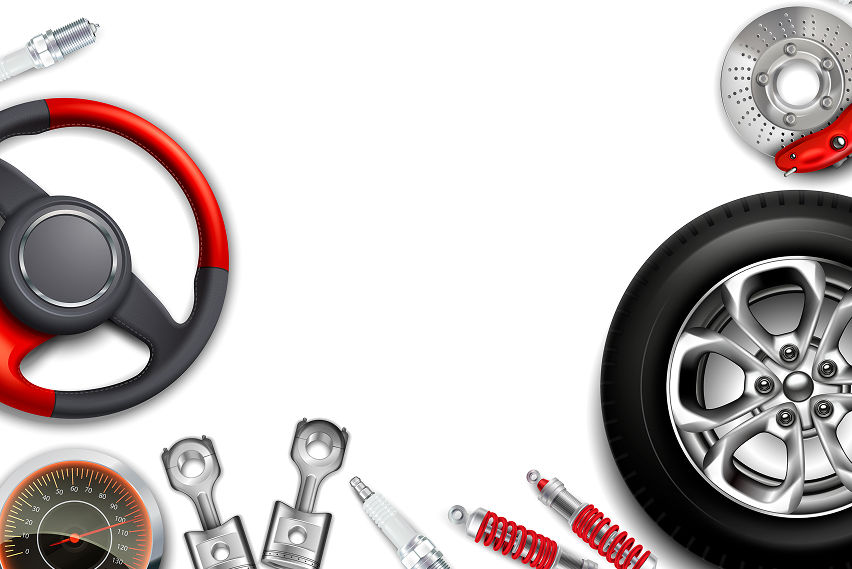 Photo from Freepik
Car parts availability is one of the biggest factors affecting insurance costs. If the car parts are imported, rare, customised, or limited in local supply, the premium will likely be higher. Why? Because a longer repair time means -
- Higher labor costs
- Longer claim processing
- Bigger potential payouts
Japanese brands like Toyota and Honda generally enjoy lower insurance premiums because spare parts are widely available. On the contrary, European brands like BMW often cost more to insure because of the high cost of imported components.
Car colour & risk perception
Let us first check out the most popular car colours among Filipino drivers: white, silver, black, and grey. Among all the colours, white is especially popular because it reflects sunlight and looks clean. In a tropical country like ours, this matters!
Are bright-coloured cars more expensive to insure?
There’s no strong local evidence showing colour alone increases premiums. Insurers prioritise repair cost and theft risk. However, bright colours may slightly influence a car’s resale value.
Bottom line: Colour is the least important factor among the three (the other two being model and part availability).
Also Read: Bought a new Car? Getting a new insurance policy vs adding it to your existing plan
Car model: Performance, safety, & theft rates
SUV vs. Sedans vs. Hatchbacks
- Sedans like the Honda City usually have lower premiums because repairs are more affordable.
- SUVs, on the other hand, may cost more for the following reasons: higher replacement costs and market values, and larger parts.
- As for hatchbacks, especially the budget-friendly options, they enjoy low premiums.
 Photo from Freepik
Luxury & sports cars
Luxury and sports car models cost more to insure. Why? Due to the following reasons -
- Specialised parts
- Higher labor costs
- Increased theft risk
- Expensive tech and multiple sensors
Often, advanced safety features reduce the premium, but expensive components often offset that benefit.
Also Read: Your weekend car insurance guide: Flood, theft, & accident coverage
Part availability & repair cost
Japanese vs. European brands
In the Philippines, Japanese manufacturers enjoy dominance and have several benefits over European brands. The former offers several advantages, like -
- Easy parts availability
- Familiarity with mechanics
- Shorter repair time
The latter often requires imported parts, which increase the claim cost.
Electric & hybrid vehicles
Day by day, the popularity of hybrid and electric cars is increasing. However, they come with their own set of challenges, including -
- Battery replacement is expensive
- Parts are not readily available
- Specialised technicians are quite limited
All the above-mentioned factors contribute to higher premiums than gasoline cars.
Also Read: Car Flooding 101: What to do and when insurance will cover the damage
Real-life scenarios
Scenario 1: A white Toyota Vios
- Affordable parts
- Low theft rate
- Common model
Result: Lower premium
Scenario 2: A red sports coupe with imported parts
- High repair cost
- High-performance engine
- Rare components
Result: Higher insurance premium
Bottom line: It is not about colour alone, it’s about total risk.
How to lower your car insurance premium
Here are some practical tips -
- Choose common car models
- Install anti-theft devices
- Maintain a clean driving record
- Pick brands with easily available parts
- Compare quotes from multiple insurers (take help from trusted online platforms)
- Increase deductibles (if you are financially comfortable)
Also Read: Insurance for cars parked at home: Does it cover theft or fire?
Bottom line
By understanding how car colour, model, and part availability affect your insurance premium, you can make financial decisions as a car owner. While colour has minimal impact, your car model and the availability of spare parts significantly influence your premium.
Before buying your next vehicle, don’t just ask, “What is the retail price?”, but instead ask, "What is the insurance cost?”
Remember, a practical choice today can save you thousands of pesos every year. Choose wisely, drive safely, and insure smart.
Also Read: 10 Steps to take when your car insurance claim is denied: Solution every car owner must know
Featured Articles
- Latest
- Popular
You Might Also Be Interested In
- Journal
- Advice
- Financing
-
PH-spec Ford Everest, Ranger get major revampSep 04, 2026
-
-
-
MG S5 EV makes PH debutPaulo Papa . Aug 27, 2026
-
CAMPI-TMA July 2026 YTD sales down by 10%Aug 26, 2026
-
-
How to handle a checkpoint: The right and wrong movesCarmudi PH . Apr 14, 2025
-
-
-
-
-
Fast-track your car loan payoff with these hacksCarmudi PH . Apr 06, 2025
-
-
-
Need better auto loan terms? Here’s how to refinanceCarmudi PH . Mar 21, 2025
Featured Cars
- Latest
- Upcoming
- Popular
Car Articles From Zigwheels
- News
- Article Feature
- Advisory Stories
- Road Test
-
Continental Tires expands UHP, large tire portfolioPaulo Papa . Sep 18, 2026
-
Could Suzuki’s kei cars in Brunei also be possible in PH?Cesar Miguel . Sep 18, 2026
-
Suzuki showcases Blanka-themed Carry at TGS 2026Paulo Papa . Sep 18, 2026
-
iCAUR V23 stars in ‘Wuhu Drift’Paulo Papa . Sep 18, 2026
-
ACMobility holds dominant share in PH EV infraRuben Manahan IV . Sep 18, 2026
-
Here are 5 new motorcycles for Filipinos looking to reduce daily fuel expensesPaulo Papa . Sep 18, 2026
-
Here’s why this family only buys ToyotasCesar Miguel . Sep 17, 2026
-
3 reasons to be excited about the Xpeng X9Cesar Miguel . Sep 16, 2026
-
3 reasons to be excited for the Geely Monjaro EM-iCesar Miguel . Sep 11, 2026
-
Here are MG S5 EV's strengths, weaknessesCesar Miguel . Sep 04, 2026
-
Tips on how to prevent vehicle firesCesar Miguel . Mar 17, 2026
-
How to prepare your car for summerCesar Miguel . Mar 11, 2026
-
Avoid road trip horror stories this 'Undas' with these tipsRuben Manahan IV . Oct 20, 2025
-
Here are ways to avoid road ragePaulo Papa . Sep 23, 2025
-
How well do you understand traffic signs?Cesar Miguel . Sep 09, 2025
-
Sedan supremacy: Toyota Corolla Altis GR-S HEVPaulo Papa . Aug 27, 2026
-
First drive: Kia Sportage Turbo HybridCesar Miguel . Aug 18, 2026
-
First impressions: Geely EX2Cesar Miguel . Jun 18, 2026
-
ELECTRIA: VinFast VF 6 is a well-equipped urban warriorCesar Miguel . Apr 20, 2026
-
BYD DM-i lineup conquers Southern LuzonCesar Miguel . Mar 10, 2026