
What is the LTFRB Looking For in a P2P Bus?

The Land Transportation Franchising and Regulatory Board (LTFRB) recently announced that it is opening 28 new Premium Point-to-Point (P2P) Bus Service routes for interested operators. All 28 routes are distributed through 16 franchise packages, with each package being awarded to one applicant.
To be a Premium P2P operator though, the LTFRB has a stringent set of requirements for the buses to be fielded on the 28 routes, and these are:
Bus Body Make
- Single deck or double deck (11 to 13 meters in length);
- With external color/branding as specified by the Board;
- Euro IV or better emission standard or clean alternative fuel (e.g. electric, hybrid) with equivalent or better emissions;
- Low floor entry (0.28 to 0.38 meters) with space for one passenger with wheelchair, plus foldable or retractable wheelchair, plus foldable or retractable wheelchair ramp at exit;
- Provincial buses shall use coaches with at least 11 meters in length with provision for cargo compartments; and
- Maximum of four reclining seats per row.
Operating Conditions
- Service with scheduled trips and designated off-street stops for loading/unloading passengers;
- No loading/unloading of passengers outside of designated off-street stops;
- With onboard CCTV, four cameras, continuous recording of minimum past 72 hours of bus operations;
- With vehicle tracking via onboard Global Navigation Satellite System (GNSS) devices compliant with the Board's specifications and driver console enabling two-way communication;
- With free Wi-Fi for all passengers;
- With onboard automated bus arrival electronic display and announcement system;
- With Automatic Fare Collection System as one of the options for payment;
- Speed limiter;
- Drivers under salary, with no compensation linked to ridership, but with incentives for better customer service and reduction of accidents;
- With advanced ticketing facility and seat booking via mobile phone and internet;
Beyond this list, the LTFRB expects the prospective P2P operator to have a sufficient layover area/garage to accomodate all units, with a space provision of at least 40 sqm per unit plus 30 percent of garage area for circulation. Furthermore, if the prospective P2P operator is already running a fleet of buses, the area for the P2P bus units should be over and above the existing garage/depot space of the current bus fleet.
Also, the maximum headway--the time between each dispatched vehicles on the same route--one year after start of operations is 10 minutes during peak hours and 30 minutes during off-peak hours. During interim operations, the maximum headway is 30 minutes during peak hours and one hour during off-peak hours, subject to actual passenger demand.
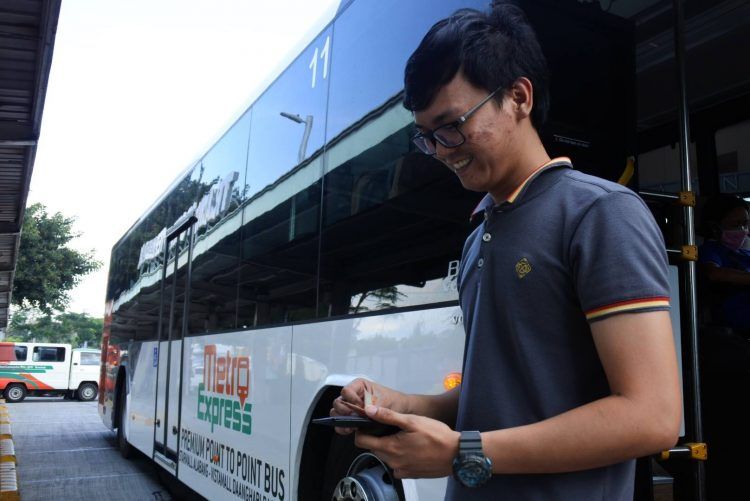 From MetroExpress P2P's Facebook page
Share this article

Featured Articles
- Latest
- Popular
-
CAMPI-TMA May 2026 YTD sales down by 12%Ruben Manahan IV . Jun 26, 2026
-
Mitsubishi PH adds new variant to Xforce rosterPaulo Papa . Jun 26, 2026
-
LC300 HEV now available at Toyota PH dealershipsRuben Manahan IV . Jun 25, 2026
-
Geely PH officially launches EX2Paulo Papa . Jun 24, 2026
-
BYD now an AVID memberRuben Manahan IV . Jun 16, 2026
-
Haval H7 further expands GWM PH SUV lineupPaulo Papa . Jun 16, 2026
-
Geely PH officially launches EX2Paulo Papa . Jun 24, 2026
-
Mitsubishi PH adds new variant to Xforce rosterPaulo Papa . Jun 26, 2026
-
LC300 HEV now available at Toyota PH dealershipsRuben Manahan IV . Jun 25, 2026
-
CAMPI-TMA May 2026 YTD sales down by 12%Ruben Manahan IV . Jun 26, 2026
Recommended Articles For You
Featured Cars
- Latest
- Upcoming
- Popular
Car Articles From Zigwheels
- News
- Article Feature
- Advisory Stories
- Road Test
-
VinEnergo to develop solar-on-water projects in PHRuben Manahan IV . Jun 26, 2026
-
Will the Kia Sportage have the same warm reception as in UK?Paulo Papa . Jun 26, 2026
-
NLEX proactively prepares for rainy seasonRuben Manahan IV . Jun 26, 2026
-
2026 TGR PH Cup to commence 2nd leg next monthCesar Miguel . Jun 26, 2026
-
Mitsubishi Motors PH makes Xforce more accessible with GLX introductionRuben Manahan IV . Jun 26, 2026
-
EDITORIAL: Mitsubishi Xforce HEV to require strong will to enter PH marketRuben Manahan IV . Jun 26, 2026
-
Denza B5: 3 reasons to buyPaulo Papa . Jun 26, 2026
-
3 reasons to like the Nissan X-Trail e-POWERCesar Miguel . Jun 25, 2026
-
Here are 3 reasons to get the Denza B8Paulo Papa . Jun 24, 2026
-
Small EV scuffle: Geely EX2 vs Dongfeng NammiCesar Miguel . Jun 24, 2026
-
Tips on how to prevent vehicle firesCesar Miguel . Mar 17, 2026
-
How to prepare your car for summerCesar Miguel . Mar 11, 2026
-
Avoid road trip horror stories this 'Undas' with these tipsRuben Manahan IV . Oct 20, 2025
-
Here are ways to avoid road ragePaulo Papa . Sep 23, 2025
-
How well do you understand traffic signs?Cesar Miguel . Sep 09, 2025
-
First impressions: Geely EX2Cesar Miguel . Jun 18, 2026
-
ELECTRIA: VinFast VF 6 is a well-equipped urban warriorCesar Miguel . Apr 20, 2026
-
BYD DM-i lineup conquers Southern LuzonCesar Miguel . Mar 10, 2026
-
Hyundai Creta Premium: balancing engaging drive,comfortCesar Miguel . Feb 13, 2026
-
First drive: 4th-gen Changan CS55 PlusPaulo Papa . Feb 09, 2026