
How To Check Your Car’s Coolant Level

Car ownership is more than just having a machine that can transport you from one destination to another. It involves regular maintenance to ensure that your car remains in tip top shape and will always be your reliable means of transportation. One of the things you need to regularly check is your car's coolant level as this prevents your vehicle's engine from overheating.
Your car's engine works extensively as you drive and generates heat in the process. If your car doesn’t have enough coolant, it will result into engine overheat that will surely cause you hassle. Other than overheating, your car's engine may have several other problems if there's not enough coolant to control the engine temperature. This is why an engine coolant is a crucial component in your car and should be checked regularly.
The engine coolant's main responsibility is to keep your car's engine at an optimal running temperature. The engine coolant is a mixture of water and antifreeze. It comes in several colors including green, yellow, pink, red, or orange.
In case you're wondering, antifreeze is a combination of distilled water and a certain type of alcohol. Antifreeze does a number of ways in protecting your car's engine such as (1) prevent engine water from boiling, (2) prevent rust and corrosion of metal parts, and (3) prevent corrosion of rubber and plastic parts, among others.
With that in mind, your car's radiator cools your engine and needs water and coolant to execute its job properly. Before you check your car's coolant system, it is best if your engine is not hot. As such, you should check the coolant level before you set off and drive to your destination.
It's easy to check your car’s coolant level and you don't need to be a mechanic to do it. The first thing you need to do is open your car's hood. Then, look for the engine coolant reservoir, which is usually whitish or grayish in color and has a brightly colored cap. However, in the photo shown below, the coolant reservoir is in black. You can also consult the owner's manual to be able to spot where the coolant reservoir is located.
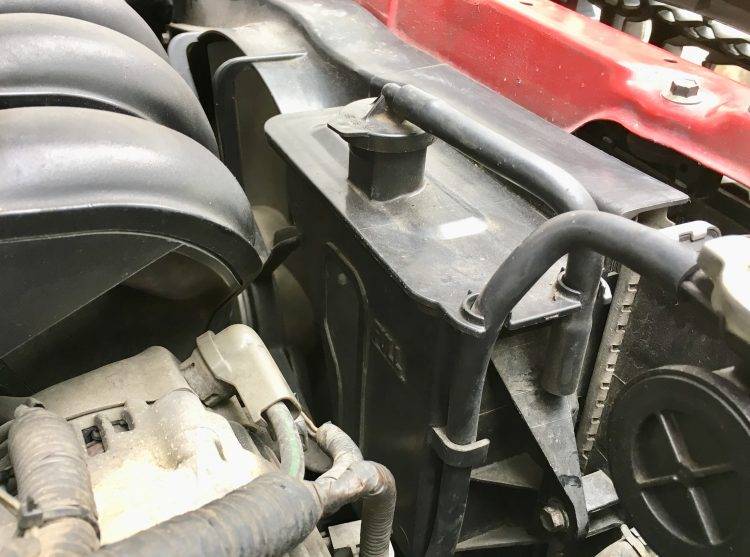 Photo: Martin Aguilar
The next thing you need to do is to look at the coolant reservoir markings. It has a Low and Full / Min and Max markings on the side of the reservoir. The markings will indicate if your car has enough coolant. If the coolant reaches the "Full" line or if it is between the two marks, then you're good to go as your car has enough engine coolant. However, if it falls in the "Low" or it is near the "Low" line, then you should add coolant into the reservoir. Make sure that you fill only until the “Full” or “Max” marking. Use a funnel to make it easier for you to fill in the additional coolant.
Yes, it’s that simple. Check your car's manual to know what type of coolant is recommended to use. Checking your car's coolant regularly--such as before you drive off--can help your car's engine from overheating. Moreover, checking your car's coolant level regularly will allow you to prevent costly engine damage or other car problems.
Featured Articles
- Latest
- Popular
-
GAC PH expands lineup with Aion UT introductionRuben Manahan IV . May 21, 2026
-
Deepal PH establishes first-ever showroomPaulo Papa . May 21, 2026
-
-
-
Suzuki breaches 3M production milestone in PHRuben Manahan IV . May 15, 2026
-
Honda hits 12-M moto sales milestone in PHRuben Manahan IV . May 14, 2026
-
-
-
Deepal PH establishes first-ever showroomPaulo Papa . May 21, 2026
-
Suzuki breaches 3M production milestone in PHRuben Manahan IV . May 15, 2026
-
GAC PH expands lineup with Aion UT introductionRuben Manahan IV . May 21, 2026
Recommended Articles For You
-
-
-
-
-
-
Honda PH: Be a better rider during lockdownRuben Manahan IV . Jun 25, 2020
Featured Cars
- Latest
- Upcoming
- Popular
Car Articles From Zigwheels
- News
- Article Feature
- Advisory Stories
- Road Test
-
Ford PH could be launching a V6-powered Everest soonCesar Miguel . Today
-
MG cars destroyed in 2025 fire incident to be ‘responsibly’ disposed ofPaulo Papa . Today
-
In 8 pictures: GAC International PH launches Aion UTCesar Miguel . May 21, 2026
-
Deepal puts up flagship dealership in PHCesar Miguel . May 21, 2026
-
Hyundai Motor gets 6th consecutive Nürburgring winPaulo Papa . May 21, 2026
-
Check out the Toyota bZ4X's 4 electrifying tonesPaulo Papa . May 20, 2026
-
Check out the MG G50 PHEV’s strengths, weaknessesCesar Miguel . May 19, 2026
-
Check out the VinFast VF MPV 7’s closest competitorCesar Miguel . May 18, 2026
-
How did ‘Morizo’ start in motorsports?Ruben Manahan IV . May 18, 2026
-
Check out the Jaecoo J5 SHS-S’ similarly-sized rivalsCesar Miguel . May 14, 2026
-
Tips on how to prevent vehicle firesCesar Miguel . Mar 17, 2026
-
How to prepare your car for summerCesar Miguel . Mar 11, 2026
-
Avoid road trip horror stories this 'Undas' with these tipsRuben Manahan IV . Oct 20, 2025
-
Here are ways to avoid road ragePaulo Papa . Sep 23, 2025
-
How well do you understand traffic signs?Cesar Miguel . Sep 09, 2025
-
ELECTRIA: VinFast VF 6 is a well-equipped urban warriorCesar Miguel . Apr 20, 2026
-
BYD DM-i lineup conquers Southern LuzonCesar Miguel . Mar 10, 2026
-
Hyundai Creta Premium: balancing engaging drive,comfortCesar Miguel . Feb 13, 2026
-
First drive: 4th-gen Changan CS55 PlusPaulo Papa . Feb 09, 2026
-
Changan CS15: small upgrades makes the differenceCesar Miguel . Feb 06, 2026